How Cricket Academies Develop Young Players Into International Stars
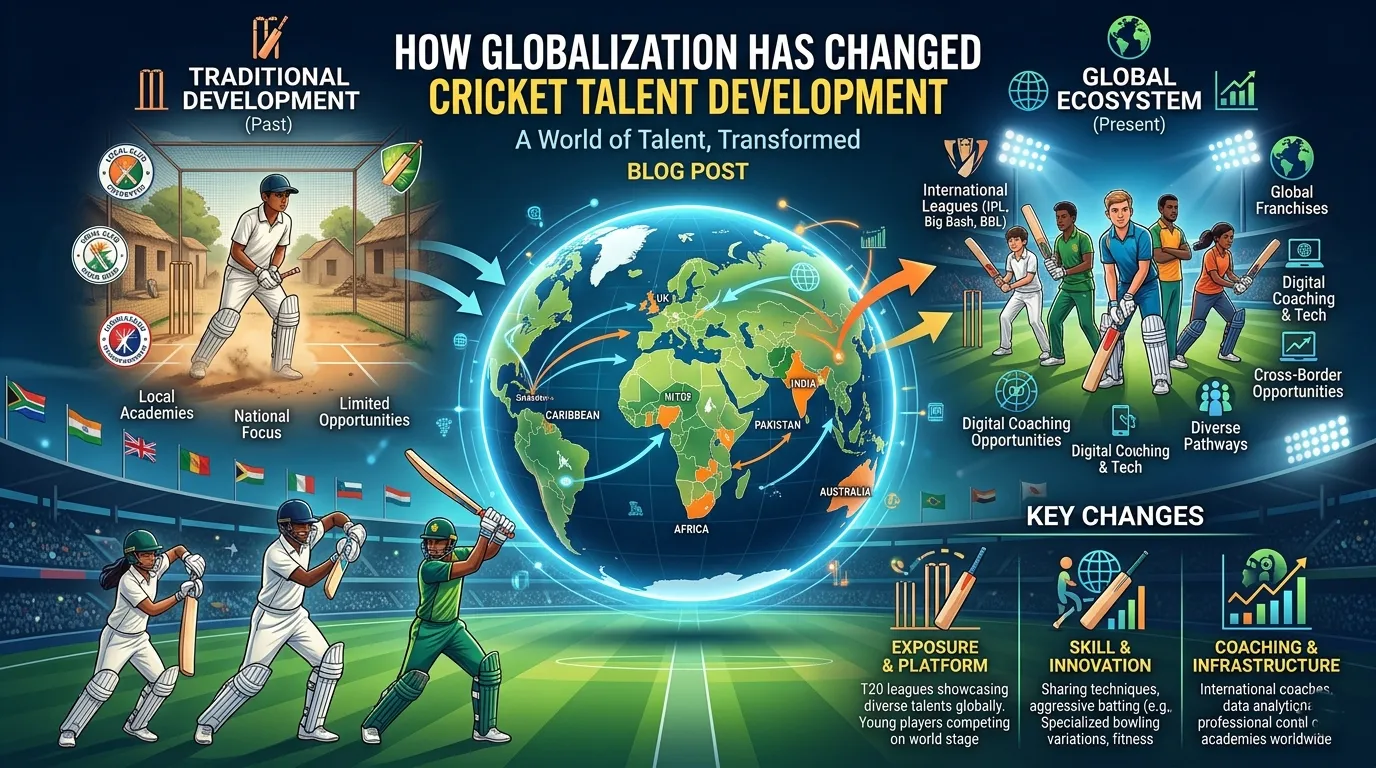
Behind almost every player who walks out to represent India at international level there are years of structured development that most fans never see. Not just gully cricket and natural talent — but systematic coaching, physical conditioning, mental skills training, and competitive exposure delivered through a cricket academy environment that builds complete cricketers rather than simply talented individuals.
Cricket academies have become the most important bridge between raw potential and international readiness in the modern game. Understanding what actually happens inside these environments — and why it produces better cricketers than unstructured talent development alone — helps explain how India continues to produce world-class players consistently across generations.
How Talent Is Identified and What Happens Next
The first function a cricket academy serves is systematic talent identification — finding young players who show genuine potential before that potential has been developed, trained, or even fully expressed.
Academy scouts and coaches look for specific qualities in young players that suggest international-level potential. Natural bat speed. An instinctive sense of timing that cannot be coached but can be refined. Bowling actions with efficient energy transfer. Athletic movement patterns that suggest trainability. These raw physical qualities, identified early, indicate a player whose ceiling is high enough to justify structured long-term development investment.
The age at which meaningful identification happens has dropped significantly in modern cricket. Elite academies are identifying and beginning structured work with players as young as eight and ten years old, recognising that the technical foundations laid in early development have a disproportionate influence on what a player eventually becomes. A young batter who develops correct grip, stance, and movement patterns early builds on those foundations throughout their career. One who develops poor habits early spends years of later coaching trying to undo them.
Once identified, a player enters a structured development pathway rather than simply receiving more of the same general practice they were already doing. Personalised assessment establishes where the player's current skills are strongest and where the most important development gaps exist. That assessment drives a specific training programme built around that individual's needs rather than a generic curriculum applied identically to everyone.
The Coaching Environment That Academies Provide
The quality of coaching available inside structured cricket academies is fundamentally different from what most young players access through school or club cricket, and that difference directly drives the acceleration in development that academy environments produce.
Specialist coaches for each discipline have replaced the generalist model where one coach managed all aspects of a player's game. Batting coaches work exclusively on the technical elements of batsmanship — grip, stance, footwork, shot selection, playing different types of bowling. Fast bowling coaches understand the biomechanics of the action and the specific physical demands involved. Spin bowling coaches work on grip variations, flight, and the tactical dimensions of bowling in each format. Wicketkeeping coaches develop the specific footwork and catching techniques that position demands.
This specialisation means each player receives coaching from someone with deep expertise in their specific discipline rather than general advice from someone managing the whole team. The quality of technical feedback available to an academy player significantly exceeds what most club coaches can provide regardless of their enthusiasm and commitment.
Personalised training plans are a central feature of serious academy environments. Two players at the same academy working on their batting may be doing entirely different things in any given training session based on the specific technical areas each needs to develop. One might be working on footwork against spin. Another might be drilling their defensive technique against short-pitched bowling. This individualisation makes development more efficient than group instruction that addresses everyone at the same point regardless of where each player actually is.
Facilities support this coaching quality. Quality net pitches with varying surfaces — some that replicate spin-friendly conditions, others that offer pace and bounce — allow players to practise against the specific conditions they will face in competition. Bowling machines that simulate different bowling styles at different speeds give players repetition against specific delivery types that human bowlers cannot consistently replicate in nets. Gym facilities designed around cricket-specific athletic development support the physical training that modern cricket demands alongside technical skill work.
Physical Development: Building Athletes First
Modern cricket demands genuine athleticism across all positions and formats, and cricket academies address this requirement through structured physical conditioning programmes that go far beyond the general fitness that previous generations of cricketers developed through playing alone.
The physical demands of cricket are more diverse than they appear from outside the game. A fast bowler needs explosive power for the delivery, aerobic endurance for sustained long spells, and specific strength in the core and shoulder that protects against the injuries the bowling action creates. A batter needs quick-twitch explosive speed for rapid footwork, strong rotational power through the core and arms for shot-making, and the stamina to maintain concentration and physical alertness across a full day's batting. A fielder needs sprinting speed, diving agility, and the throwing strength and accuracy to make run-out opportunities count.
Academy conditioning programmes develop each of these qualities through sports-science-informed training rather than generic fitness work. Young players learn early that physical preparation is as integral to their cricket development as technical skill work. The habit of taking their physical conditioning seriously, established in an academy environment before they reach domestic or international cricket, produces athletes who arrive at higher levels better prepared than those who developed their fitness reactively.
Injury prevention receives specific attention in academy physical programmes because the injury patterns that end or compromise professional cricket careers are often the downstream consequence of poor physical preparation habits established early. Fast bowlers who develop adequate core stability, shoulder strength, and correct loading patterns in academy environments carry those protective physical qualities forward. Those who do not face the same injury vulnerabilities as generations of fast bowlers before them.
Mental Skills Training: The Dimension That Separates Complete Players
The systematic development of mental performance skills is one of the most significant ways modern cricket academies prepare players for international cricket differently from traditional development pathways.
Cricket places extraordinary mental demands on players. A batter facing a hostile fast bowler in a pressure match must maintain concentration across dozens of deliveries while managing the anxiety of the match situation, the noise of the crowd, the psychological games of the fielding side, and the physical discomfort of batting in difficult conditions. A bowler who has been hit for consecutive boundaries must reset mentally and bowl their next delivery with full intent and no residual emotional disturbance from what just happened. These mental skills are not personality gifts — they are trainable capabilities that serious development programmes address explicitly.
Sports psychologists working within academy environments teach concentration management techniques that allow players to switch fully on for each delivery and manage their mental energy across long periods of play. Visualisation practices — mentally rehearsing successful execution of specific skills in specific match scenarios — build neural patterns that support actual performance. Pressure management strategies give players tools for managing anxiety productively rather than allowing it to compromise their technical execution.
The confidence that structured mental skills development builds across years of academy training is one of the most durable and valuable things an academy environment provides. A player who has been systematically prepared for the mental demands of high-pressure cricket arrives at their first senior domestic match with a psychological readiness that unacademy-developed players often spend years acquiring through painful experience alone.
Tactical Intelligence: Learning to Think Like a Cricketer
Understanding the game at a tactical level — reading match situations, knowing when to attack and when to defend, understanding field placements and how to exploit them, recognising a bowler's plan and counteracting it — is a dimension of cricket development that informal environments rarely develop systematically.
Academy programmes address tactical intelligence through structured game analysis, video review, and specifically designed training scenarios that require players to make tactical decisions under practice conditions. A young batter who watches video of their own dismissals against specific bowling types, discusses the tactical situation with a coach, and then practises the correct response in nets is developing tactical awareness more deliberately than one who simply plays and hopes to learn through experience.
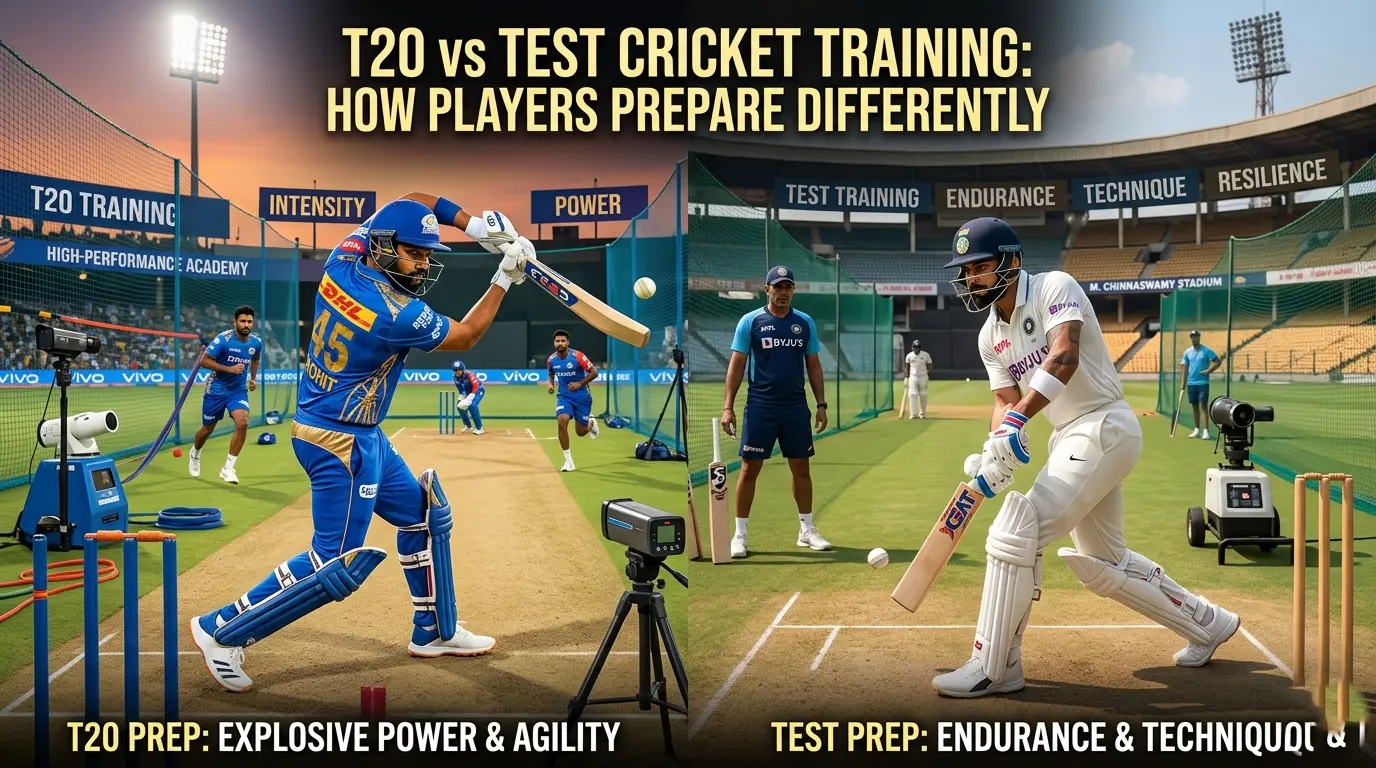
Format-specific tactical understanding is particularly important in the modern game where players need to adjust their approach significantly between Test, ODI, and T20 cricket. Academy environments that expose players to all three formats and develop their tactical understanding of each prepare versatile cricketers who can contribute across the complete range of what international cricket demands.
Game simulation drills — practice scenarios that replicate specific match situations with consequences attached — develop the decision-making skills that transfer from nets to matches more reliably than non-contextual skill drilling alone. A batter practising their response to a specific field placement under simulated run-chase pressure is more likely to execute correctly in a real match than one who has only drilled the technical shot without the tactical context.
How Academies Connect Players to Professional Cricket
The pathway function of a cricket academy is arguably its most practically important contribution to a young player's career — connecting good performances in a development environment to the attention of selectors and the doors to domestic and eventually international cricket.
Academy tournaments and inter-academy competitions provide selection-relevant performance data in a more structured and systematically observed context than school or club cricket. National selectors and state board talent scouts monitor academy competition specifically because the quality of opposition and the coaching context makes performances more meaningful than comparable statistics from unstructured environments.
IPL franchise academies have added a significant new pathway dimension to Indian cricket's development landscape. Each major franchise now maintains youth development operations that serve both as talent pipelines for the franchise and as development environments producing players for the broader domestic system. The visibility that comes with association with an IPL franchise — even at academy level — accelerates a young player's recognition by selectors at multiple levels simultaneously.
BCCI age-group pathways run alongside and connect with academy development through Under-16, Under-19, and Under-23 competitions that provide structured progression from academy-level cricket toward domestic first-class competition. Players who perform consistently in these age-group tournaments attract India A consideration, and India A performance is the final step before senior national selection. The academy environment that prepares a player to compete effectively in BCCI age-group cricket is indirectly preparing them for the complete pathway to international cricket.
FAQ: How Cricket Academies Develop Young Players
What do cricket academies teach young players? Cricket academies develop technical batting, bowling, and fielding skills through specialist coaching, physical conditioning through sports-science-informed training, mental performance skills through sports psychology, tactical understanding through game analysis, and life skills through structured development programmes.
At what age should a child join a cricket academy? Serious cricket academies identify and begin working with talented young players from as early as eight to ten years old, recognising that technical foundations established early have a disproportionate influence on long-term development. Structured academy training becomes particularly important from age twelve onwards.
How do IPL academies help young cricketers in India? IPL franchise academies provide young players with professional coaching environments, high-quality facilities, competitive exposure against strong opposition, and the visibility that comes with franchise association — all of which accelerate development and increase the likelihood of being noticed by domestic and national selectors.
What makes a good cricket academy in India? Quality cricket academies combine specialist coaches for each discipline, adequate training facilities including varied pitch surfaces and modern equipment, personalised development programmes, structured competitive exposure, and clear pathways connecting to BCCI age-group and domestic competitions.
How do cricket academies connect young players to international cricket? Academies connect players to international cricket through structured competitive exposure in tournaments observed by selectors, partnerships with state cricket boards and IPL franchises, and systematic performance tracking that brings consistent performers to the attention of BCCI age-group selectors.