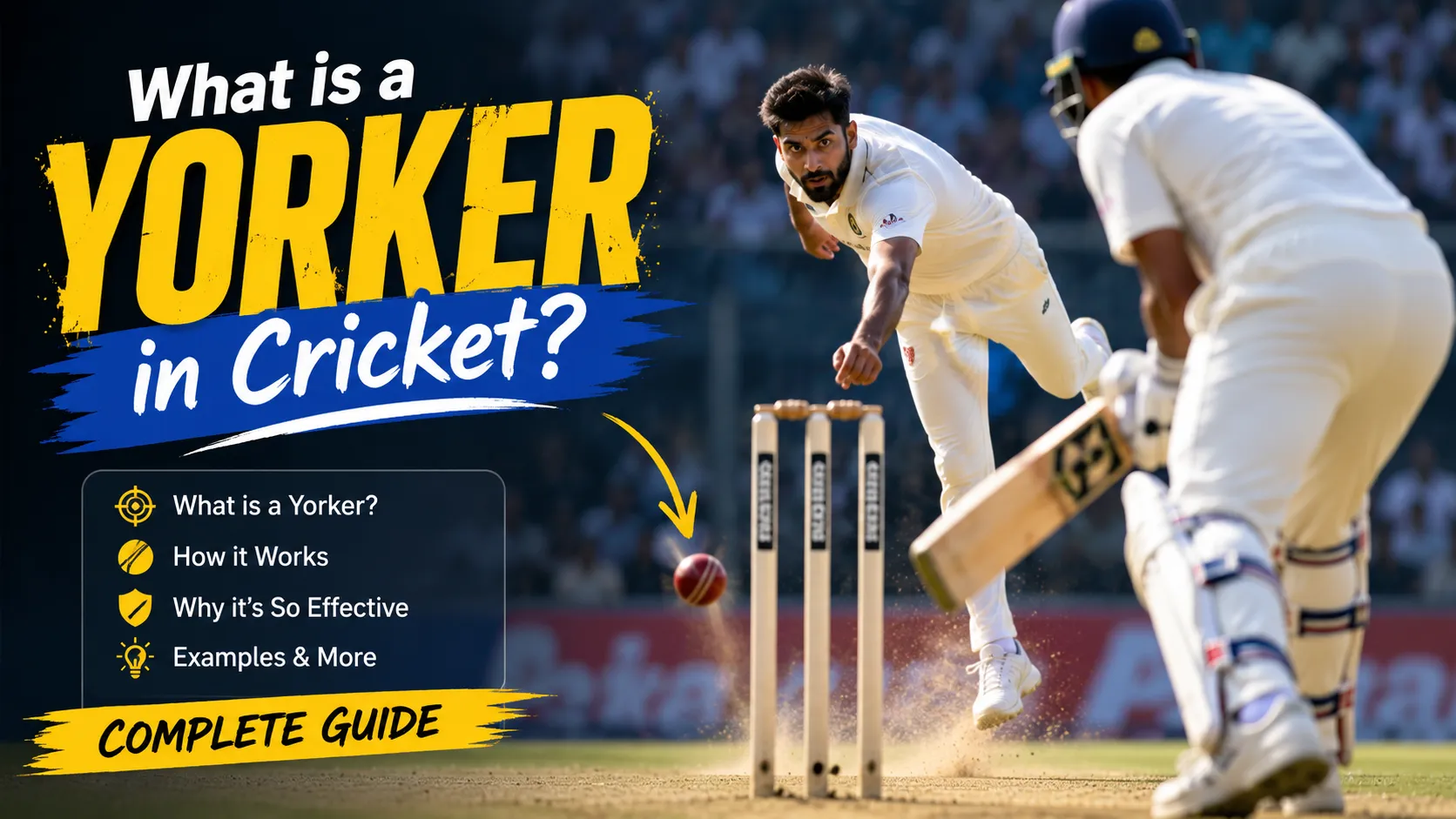
Mental Strength of Fast Bowlers in Cricket: The Unseen Battle Behind Every Delivery
When a fast bowler steams in from the boundary edge, muscles firing, the crowd holding its breath, we see the physical spectacle — the pace, the bounce, the movement off the pitch. What we almost never see is the battle happening simultaneously inside the bowler's mind.
Mental strength in fast bowling is not a soft skill sitting alongside the physical ones. It is the quality that determines whether all that physical ability actually converts into wickets, sustained performance, and a long career. Without it even the most gifted fast bowlers break down — not always physically, but mentally — when the pressure of the game, the grind of long spells, and the reality of injuries test them beyond what pure athleticism can handle.
Why Fast Bowling Is Uniquely Demanding on the Mind
Fast bowling places more sustained physical stress on the human body than almost any other action in professional sport. The forces travelling through the lower back, hips, and shoulders during a fast bowling delivery are extraordinary, and they repeat with every ball bowled across a career of thousands of deliveries. This physical reality has a direct mental consequence — fast bowlers live closer to injury than any other type of cricketer, and they know it.
Injury rates among fast bowlers are consistently higher than any other position in cricket, with some research suggesting more than twenty percent of fast bowlers deal with significant injuries at any given point in a playing season. Lower back stress fractures are one of the most common and most serious problems, capable of sidelining a bowler for months and requiring both physical rehabilitation and a complete mental reset before full performance returns.
The mental challenge of this injury reality is not simply about recovering from individual injuries. It is about playing at full pace and intensity while carrying the knowledge that each delivery adds load to a body that has already been through significant stress. That awareness, if it becomes fear, destroys fast bowling. A bowler who is mentally flinching before they release the ball has already been beaten — not by the batter but by their own mind.
The Pressure of Being Watched on Every Delivery
Every delivery a fast bowler bowls is visible, evaluated, and remembered. There is no hiding. A wide is immediately signalled. A no-ball costs a run and a free delivery. A boundary brings the fielding team's heads down. A dropped catch off the bowling feels personal even when it is not. And throughout all of this the bowler has to walk back to their mark, turn around, and run in again with exactly the same intensity and intent.
This exposure is psychologically different from what batters experience. A batter can have ten dot balls against them and still be building an innings. A bowler who concedes boundaries in three consecutive deliveries has visibly and immediately failed in front of everyone watching. The scoreboard records it in real time.
In Test cricket where there is no limit on the overs a bowler can send down, this exposure can last an entire day. A fast bowler might bowl twenty, twenty-five, or thirty overs in a single Test day on a flat pitch against a settled partnership. Each of those overs requires the same mental commitment as the first — the same belief that the next ball might be the one that produces the breakthrough, the same willingness to keep running in when the body is tired and the wicket column remains unchanged.
The mental skill required to sustain that commitment across a long unsuccessful spell is genuinely rare. It requires the ability to separate the outcome of the last delivery completely from the preparation for the next one — to exist, mentally, only in the present ball.
Resilience After Setbacks: The Reset Between Deliveries
Every fast bowler at international level faces moments that threaten to unravel their concentration. A dropped catch off a delivery that found the edge perfectly. A boundary from a full toss that should have been a yorker. Two consecutive sixes from a batter who simply guesses right. These moments happen in every spell across a career, and how a fast bowler responds in the following delivery is often more important than the setback itself.
The elite fast bowlers share a visible quality in these moments. They process the setback as they walk back to their mark — visibly, briefly, sometimes with a shake of the head or a word to themselves — and then they reset. By the time they reach their mark and turn to begin their run-up, the previous delivery is gone. What is in their mind is the next one.
This reset is not natural. It is trained. Deliberately. Fast bowlers work with coaches and sports psychologists specifically on the skill of emotional regulation between deliveries — learning to feel frustration, acknowledge it briefly, and then redirect focus to the immediate task. Positive self-talk, breathing techniques, and pre-delivery routines are all tools that serve this exact function. They create a reliable mental pathway back to present-focused concentration after a difficult moment.
Without this skill a bowler who concedes a boundary stays mentally in that boundary over the next three deliveries, bowling with doubt rather than intent. Doubt at pace produces bad deliveries. Bad deliveries under pressure produce more boundaries. The cycle compounds until a bowler's spell has unravelled not because their physical skills declined but because their mental reset failed.
The Tactical Intelligence Fast Bowling Demands
The image of a fast bowler as pure aggression and pace is incomplete. Elite fast bowling is a continuous tactical exercise played at high speed against opponents who are studying the same match as carefully as the bowler is.
A fast bowler is constantly building plans across deliveries and overs. They bowl a short ball to push a batter onto the back foot, then follow with a full delivery on the same line to find the edge. They vary their pace subtly — a ball two or three kilometres per hour slower than the previous one without changing the action — to disrupt the batter's timing. They change the angle of approach, bowl around the wicket against a left-hander, or target the rough created outside the left-hander's off stump.
All of this planning is happening while the bowler is physically fatigued, while the crowd is loud, while the captain is adjusting the field between deliveries, and while the batter at the other end is attempting to read every signal and counteract every plan. Maintaining the focus required to execute a tactical plan across a long spell when the body is tired and the environment is noisy requires mental clarity that does not come automatically.
The bowlers who manage it best are those who have learned to simplify their thinking under pressure. Rather than carrying a complex plan across an entire spell, they reduce their focus to one clear intention per delivery — hit this length, bowl this line, hit this exact spot. That simplification allows them to commit fully to execution rather than thinking their way through the delivery.
Managing the Mental Load of Injury and Return
When a fast bowler suffers a serious injury the visible challenge is physical — the pain, the surgery if required, the rehabilitation programme, the gradual rebuilding of fitness. The less visible challenge is equally demanding.
The months of rehabilitation that follow a lower back stress fracture or a major knee injury are spent largely alone. Teammates are playing. Matches are happening. The bowler is in a gym or a physio room, working through exercises that feel impossibly far from the game they want to be playing. Managing the frustration, the isolation, and the slow pace of recovery without losing motivation or belief is a genuine psychological challenge.
The return from injury carries its own mental complexity. A fast bowler who has been away from the game for six or eight months must bowl at full pace again — not at seventy percent to protect themselves, but genuinely fast, putting the same load through the same body part that broke down before. The fear of re-injury at the moment of full effort is real and rational. Overcoming it requires not just physical trust in the rehabilitation work that has been done but genuine mental courage in the act of running in and delivering at full speed when the memory of pain is recent.
The fast bowlers who return successfully from serious injuries are those who have developed the mental tools to acknowledge that fear, work through it deliberately in training, and ultimately let it go in match conditions. Those who cannot move past it bowl at less than full capacity, protecting themselves subconsciously in a way that actually increases injury risk by disrupting their natural action.
Focus Across the Noise and Distraction
International cricket is played in some of the loudest and most intense environments in professional sport. A full Indian cricket ground with eighty thousand spectators creates a noise level that makes concentration an active effort rather than a default state.
Fast bowlers deal with this environment across every delivery of a long spell. The crowd reacts to every significant moment — a boundary produces a roar, a near-miss produces a collective intake of breath, a wicket produces something that can be felt physically. Managing focus through this constant emotional environment, maintaining the quiet internal space needed for tactical clarity and physical execution, requires deliberate concentration techniques that elite bowlers develop and practice specifically.
Pre-delivery routines serve this function precisely. A set sequence of actions before beginning the run-up — a specific number of steps back to the mark, a breath, a visualisation of the intended delivery — creates a reliable trigger for focus that works consistently regardless of the external noise. The routine is a mental anchor that brings the bowler back to their own intention before every delivery regardless of what happened on the previous one or what the crowd is doing around them.
What Makes an Elite Fast Bowler Mentally
Pull all of this together and the mental profile of an elite fast bowler is genuinely remarkable. They manage chronic injury awareness without fear. They reset from setbacks between deliveries with genuine speed and completeness. They execute complex tactical plans while physically fatigued and externally distracted. They return from career-threatening injuries with full commitment rather than protective hesitation. They sustain concentration and competitive intensity across spells that last hours in conditions that test everything they have.
These qualities are not personality traits that some people have and others do not. They are skills — developed through deliberate practice, refined through experience, and supported by coaching and sports psychology that treats mental preparation with the same seriousness as technical and physical preparation.
The next time you watch a fast bowler run in for the twentieth time in a session, body tired, wicket column empty, and bowl with full aggression and clear intent, you are watching the mental skills of a professional athlete working exactly as they should. The speed and the movement are impressive. The mental strength that delivers them is what makes those qualities available under pressure — and that is the part of fast bowling that deserves far more credit than it usually receives.
FAQ: Mental Strength of Fast Bowlers in Cricket
Why is mental strength important for fast bowlers in cricket? Fast bowlers face unique mental challenges — high injury rates, sustained pressure across long spells, immediate public exposure on every delivery, and the need to reset from setbacks between balls. Mental strength determines whether their physical skills are consistently available under match pressure.
What injuries do fast bowlers commonly face in cricket? Lower back stress fractures are among the most common and serious injuries for fast bowlers. Hip, knee, and shoulder injuries are also frequent due to the repetitive high-impact nature of the fast bowling action across a career of thousands of deliveries.
How do fast bowlers stay focused during long spells? Elite fast bowlers use pre-delivery routines, positive self-talk, breathing techniques, and present-focused concentration methods to maintain focus across long spells. These tools create reliable mental pathways back to intent and clarity after difficult deliveries.
How do fast bowlers mentally recover from injuries? Returning from injury requires managing fear of re-injury at full pace, rebuilding trust in the body through gradual training, and developing the mental courage to bowl without protective hesitation in match conditions despite recent experience of pain.
What mental qualities do the best fast bowlers in cricket share? The best fast bowlers share the ability to reset quickly after setbacks, maintain tactical focus while physically fatigued, manage injury awareness without fear, and sustain competitive intensity across long spells in loud and pressurised match environments.