How to choose the best cricket bat for beginners
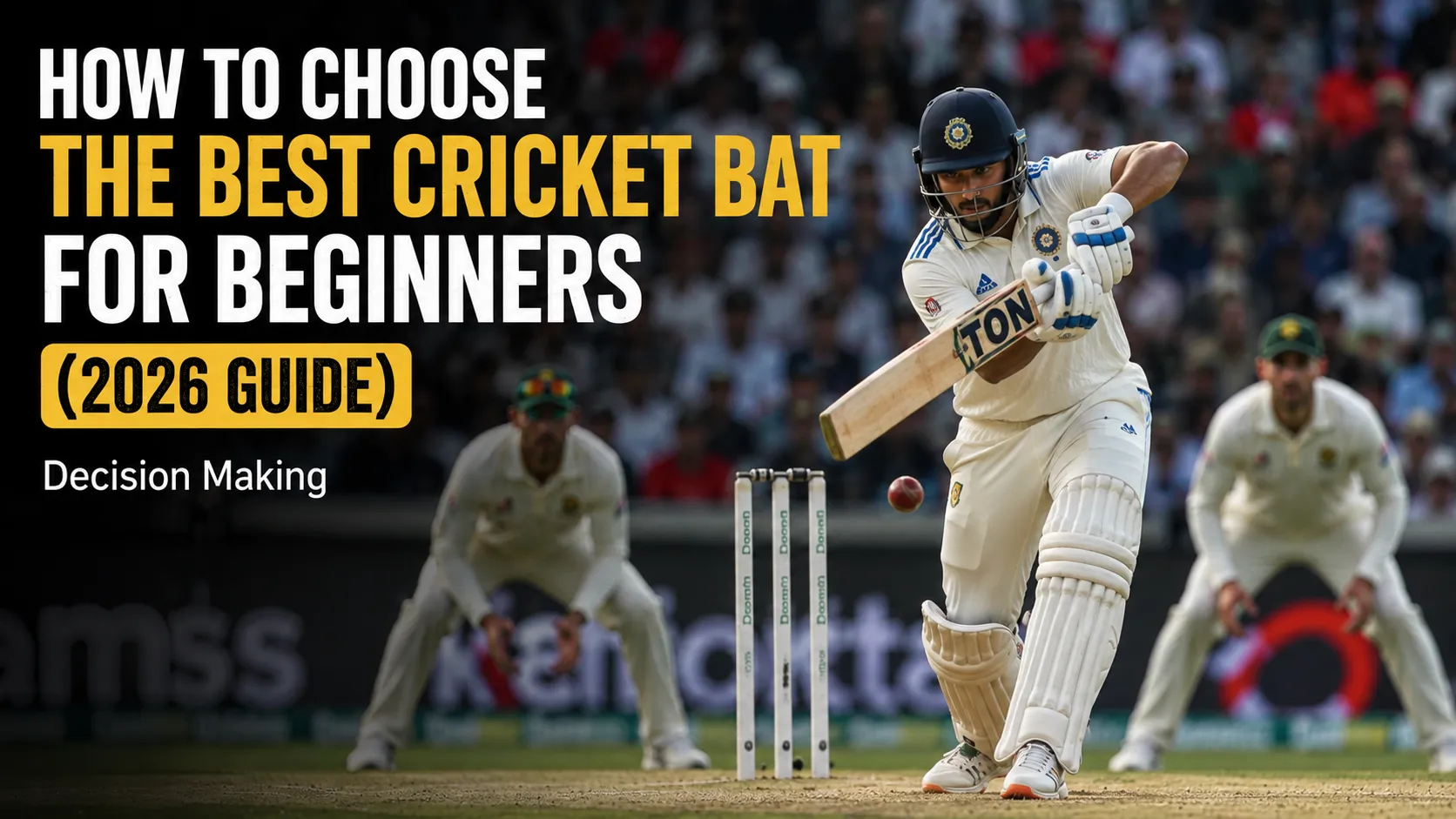
The right beginner cricket bat comes down to three things: the right size for your height, a weight you can control through a full swing, and willow that matches how often you'll actually play. Get the size wrong and no amount of skill will make up for it — a bat that's too heavy slows your bat speed on every shot, and one that's too light won't carry the ball off the middle. Kashmir willow bats cost less and suit occasional or club-level beginners, while English willow bats perform better but cost more and reward players training seriously. This guide walks through each factor so you can buy with confidence instead of guessing.
Why bat size matters more than brand
A cricket bat that doesn't match a player's height changes everything about how they bat, long before technique even comes into it. Too long, and the bat feels unwieldy on the backlift, and a batter starts compensating with their hands and hips instead of a clean swing. Too short, and reaching the pitch of the ball becomes a constant stretch. This matters more for beginners than for experienced players, because a beginner is already building fundamental muscle memory, and doing it with the wrong-sized bat teaches the wrong habits from day one.
Cricket bat size chart by age and height
Use this as a starting point, not a rule — always have the player stand the bat next to them (the top of the handle should reach roughly hip height) before buying if possible.
| Bat size | Typical age | Typical height |
|---|---|---|
| Size 0 | 4–5 years | Up to 4'0" |
| Size 1 | 5–6 years | 4'0"–4'3" |
| Size 2 | 6–8 years | 4'3"–4'6" |
| Size 3 | 8–9 years | 4'6"–4'9" |
| Size 4 | 9–10 years | 4'9"–4'11" |
| Size 5 | 10–11 years | 4'11"–5'2" |
| Size 6 | 11–12 years | 5'2"–5'6" |
| Harrow | 12–13 years | 5'6"–5'9" |
| Short Handle (adult/full size) | 13+ years | 5'9" and above |
English willow vs Kashmir willow
English willow is grown mainly in southern England, and it's lighter and more responsive for the same size of bat, which means a batter gets more power without swinging harder. It's also more expensive, because the trees take longer to mature and only a portion of each log is good enough to become a bat. Kashmir willow, grown mainly in India, is denser and heavier for the same dimensions, which makes it more durable against everyday knocks but slower to get the ball away. For a true beginner who's still working out whether they'll stick with the game, Kashmir willow is usually the more sensible starting point — it survives the mistakes new players make, and it costs a fraction of the price. Players who are training regularly and competing at club level start to feel the difference English willow makes and often upgrade once they're sure the game is one they'll keep playing.
Weight: the number beginners get wrong most often
A heavier bat isn't automatically a better bat, even though it can feel that way in a shop when a bat feels "solid." For juniors and adult beginners alike, a lighter bat that can be swung fully and controlled through the shot almost always outperforms a heavier one held back out of caution. As a rough guide, junior bats typically run from around 1lb 2oz up to 2lb 2oz depending on size, and adult beginner bats usually sit between 2lb 7oz and 2lb 10oz. Pick the lighter end of the range you're considering rather than the heavier one — a beginner grows into bat speed and timing far faster than they grow into handling extra weight.
Budget tiers: what you're actually paying for
| Budget tier | Typical price range | What you get |
|---|---|---|
| Entry | Lower end, Kashmir willow | Solid, durable bat for learning; heavier and less responsive but forgiving of mishits |
| Mid-range | Mid-priced, higher-grade Kashmir or entry-level English willow | Noticeably better pick-up and feel; a sensible step for a player who's committed to the sport |
| Performance | Higher-priced, graded English willow | Lightest pick-up for the size, best rebound off the middle; usually only worth it once a player is training and playing regularly |
What to check before you buy, in person or online
Check the bat's pick-up by holding it out in front of you the way you would at the crease — it should feel noticeably lighter than its stated weight if the willow is well-balanced. Look at the grain down the face of the bat: more visible straight grains generally means better quality willow, though grain count alone isn't a guarantee of performance. Press a thumb firmly into the face — it should give slightly and spring back, not feel rock hard, since a too-hard bat won't have been knocked in properly and risks cracking early. If you're buying online without being able to check it yourself, buy from a seller who states the weight and grade clearly, and budget for a full knocking-in process before using it in a match.
Frequently asked questions
What size cricket bat does a beginner need? It depends on height, not age alone — use the age-to-height chart as a starting point, but always check the bat reaches roughly hip height when stood next to the player.
Is Kashmir willow good enough for a beginner? Yes. Kashmir willow is heavier and less responsive than English willow, but it's more durable and far cheaper, which makes it the practical choice while a beginner is still learning the game.
How heavy should a beginner's cricket bat be? Lighter than feels intuitive. A junior bat that can be swung fully and controlled beats a heavier one held back out of caution, so choose the lighter end of the appropriate size range.
Do new cricket bats need to be knocked in before use? Yes, almost all new bats need knocking in before match use, which compresses the fibers in the face and reduces the risk of cracking. Machine-pressed bats need less knocking in than traditionally pressed ones, but the seller should tell you which type you're getting.